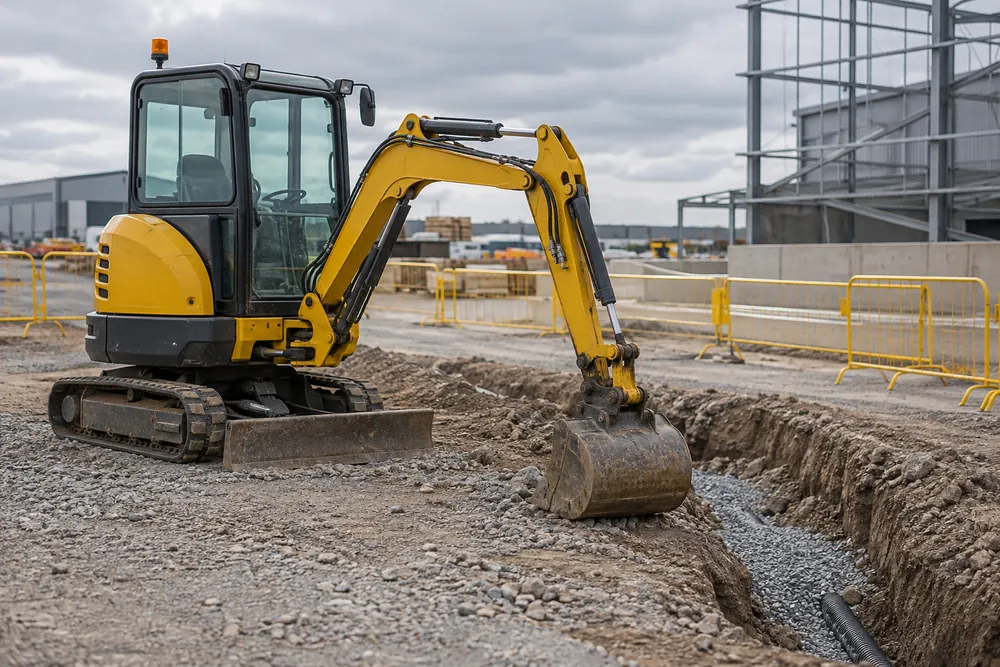
Digger And Excavator Hire For Commercial Sites
Digger hire covers a range of excavation tasks, from drainage runs to foundation preparation and loading excavated material. We take enquiries from groundworks contractors, principal contractors and commercial property teams in Manchester. Tell us what the excavation must achieve and whether the design or method statement already specifies a machine type.
The words digger and excavator often describe the same equipment in buyer enquiries. A mini digger can suit restricted compounds and narrow routes, while a larger tracked excavator may be considered where excavation volume and reach demand it. We treat the specification as a site question rather than assuming that a label identifies the correct machine.
If you need a 360 excavator, explain the working envelope as well as the digging depth. The counterweight, boom, attachment and load all occupy space as the machine moves. Reduced tail swing can help in a tight area, but it does not remove the need to control the danger zone.
Access, Reach And Ground Conditions
Measure the complete route from the unloading point to the work area. Gate width alone misses corners, steps, ramps and overhead obstructions. Check whether doors, paving, covers or buried structures impose limits, and ask for the actual dimensions and operating weight of the proposed machine before booking.
Digging depth should be considered with reach, bucket size and the position of the machine relative to the excavation. A maximum figure in a brochure may not describe a practical working arrangement. Explain where spoil will go and whether loading into a dumper is part of the same cycle.
Ground conditions matter both for travel and for the working position. Soft formation, made ground and edges beside excavations need competent assessment. If bearing capacity is uncertain, get that resolved through the project’s responsible person before choosing equipment or agreeing delivery.
Buckets, Breakers And Supporting Plant
List the required bucket widths and describe the material. A grading bucket, trenching bucket and hydraulic breaker do different jobs and can affect the machine specification. Attachment compatibility includes the coupling, hydraulic requirements and permitted use, so do not assume that an available attachment will fit any excavator.
Ask how attachment changes are carried out and checked. HSE highlights the importance of correct quick-hitch use and controlling access around excavators. Its excavator safety guidance is a useful starting point for the responsible site team.
Where material needs to leave the digging position, consider dumper hire alongside the excavator. Check that the loading height, bucket and dumper capacity work together. Plan the tipping area and haul route before treating material movement as a separate problem.
Safe Excavation And Competent Operation
The Provision and Use of Work Equipment Regulations 1998, or PUWER, apply to excavators used at work. Operators need the training, knowledge and familiarity appropriate to the machine and task. A training card can support a competence check, but the employer must also consider experience and site-specific conditions.
Excavation planning must address underground services, ground stability and the movement of people around the machine. Use the project’s service information and safe digging arrangements before breaking ground. The Construction (Design and Management) Regulations 2015 provide the wider framework for managing construction risks.
If an excavator is intended to lift loads, say so at enquiry stage. Lifting introduces separate planning and equipment questions under LOLER, including suitability and examination records. Do not treat a digging machine’s lifting capability as permission to improvise a suspended load operation.
Booking, Costs And Returning The Machine
Send the Manchester site postcode, proposed dates, access measurements and required attachments. Explain whether the machine is self-drive or you want an operated option discussed. Include any restrictions on delivery vehicles and the hours during which the site can receive a transporter.
The quotation should identify the machine class, hire period, transport, attachments and fuel arrangements. Ask about VAT, damage responsibility, cleaning, track damage and any restrictions on working hours. Rates depend on the specification and terms, so compare the total package rather than an isolated advertised figure.
At handover, record the condition of tracks, bodywork and attachments with the supplier’s agreement. Understand the daily checks, shutdown procedure and fault reporting route before use. Keep the machine secure whenever it is unattended and follow the agreed refuelling arrangements.
When the excavation phase ends, request off-hire in the required way and retain confirmation. Position the machine for safe collection without blocking an operational route. For the next stage of ground preparation, our compaction roller hire guide explains the questions to resolve before finishing the surface.
Your Hire Checklist
- Provide excavation depth, access measurements and ground details.
- Confirm machine size, buckets and compatible attachments.
- Resolve service checks, competent operation and delivery access.
- Check equipment at handover and agree the collection process.
Digger Hire FAQs
Can A Mini Digger Fit Through A Narrow Entrance?
Mini digger access depends on the exact machine dimensions and the whole route to the work area. Measure width, height, corners and any ramps, and ask for the proposed model’s transport dimensions. Retractable tracks may help on some machines, but their configuration and safe operating arrangements must be confirmed before delivery.
Is Digger Hire The Same As Excavator Hire?
Digger hire and excavator hire commonly describe the same equipment category. The useful distinction is the machine’s weight, dimensions, digging performance and attachment compatibility. Explain the actual task, ground and working space in your enquiry so the specification can be checked, particularly when a contract asks for a particular excavator class.